
Winter 2026 course:
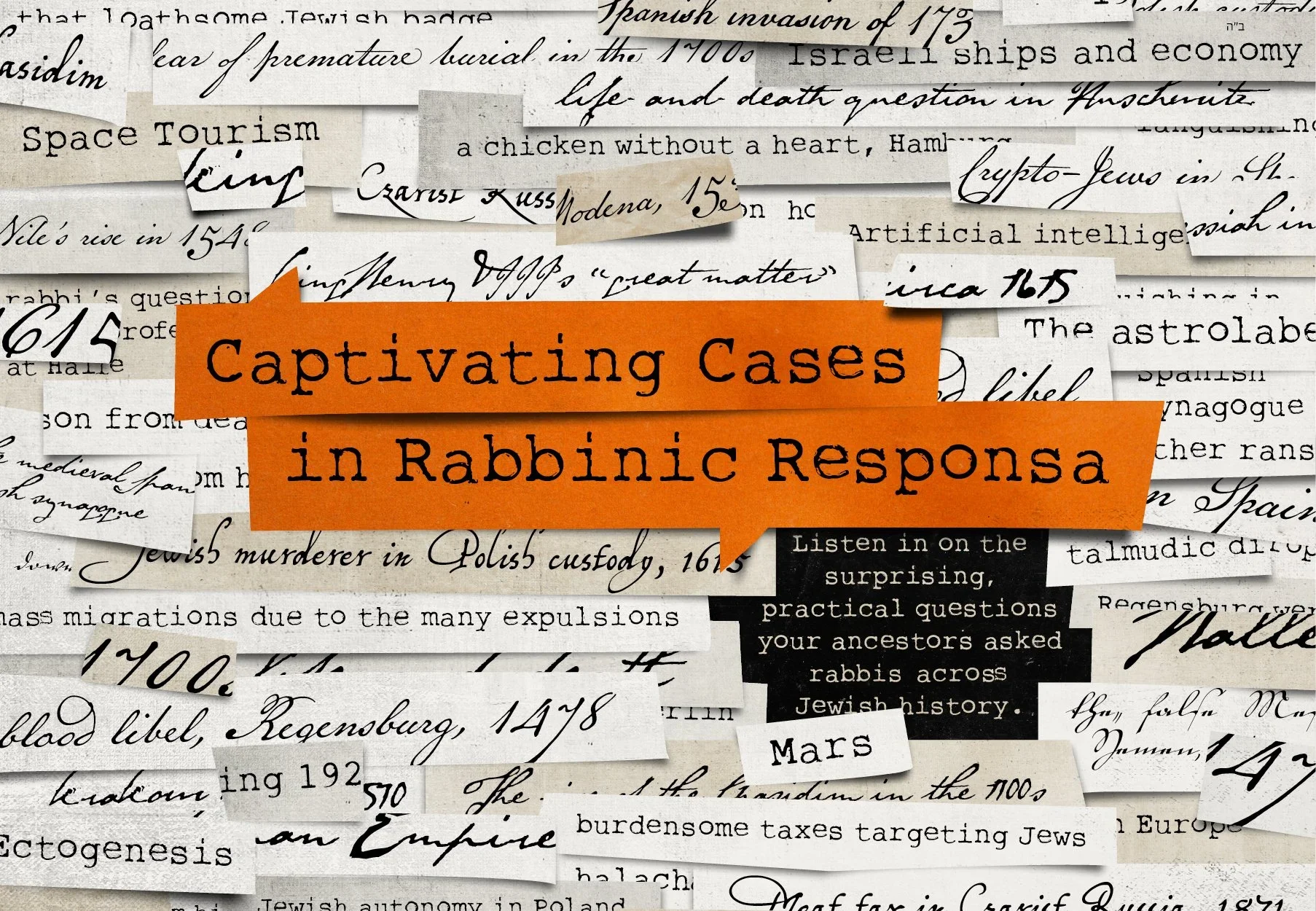
Captivating Cases in Rabbinic responsa
Listen in on the surprising, practical questions your ancestors asked rabbis across Jewish history.
Join this six-session journey into rabbinic responsa—the six thousand-book archive of real questions ordinary Jews asked their rabbis across the centuries.
Some of the questions are mundane (Jerusalem, 1866: Is this strange new breed of chicken kosher?).
Others are dramatic or even heartbreaking (Auschwitz, 1944: May I save my only son if another Jew will be killed instead?).
Still others are just surprising (Valencia, 1380: Is it legal to buy half the synagogue seats and charge rent?).
Each one offers a vivid, unfiltered window into how our ancestors lived, what challenged them, and what they cared about most.This course will give you a deeper appreciation for Jewish history and for the beauty of Judaism itself.
Six Monday Evenings
Jan. 19, 26 • Feb. 2, 16, 23 • Mar. 9
6:45 PM - 8:00 PMPrice: $115 per person
15% Couples DIscount Discount (until the opening night)
First night is free and open to the public.
Lesson Outline
Lesson One
The People Who Asked The Questions
What do these questions reveal about our ancestors? What did they think, feel, and value? Explore five fascinating stories to find out.
Cases: Barcelona, 1300; Algiers, 1450; Modena, 1530; Spain, 1450; Auschwitz, 1944
Lesson Two
The Quest for Facts
Do sages make assumptions about how reality works, or do they investigate the facts? Follow rabbis as they conduct five fascinating investigations worldwide.
Cases: Cairo, 1548; Altona, 1709; Hamburg, 1772; Jerusalem, 1866; Brooklyn, 1958
Lesson Three
How the Torah Stays Relevant
See inside the process that enables the Torah’s ancient code to guide life in an ever-changing world. Witness the precise process of applying Talmudic precedent.
Cases: Barcelona, 1300; Valencia, 1380; Pavia, 1478; Berezhany, 1908
Lesson Four
When the Exception Is the Law
Explore four unexpected rulings to uncover the hidden fallback mechanisms within Jewish law. These aren’t exceptions to the law—they’re the law revealing its quiet values, like human dignity and peace in the home.
Cases: Pavia, 1450; Salonika, 1550; Krakow, 1570; Liozna, 1790
Lesson Five
Answering the Whole Person
Rules don’t always translate easily into reality. See how sages account for the practical, social, and emotional realities surrounding a question to ensure their ruling leads to its intended outcome.
Cases: Cairo, 1173; Barcelona, 1300; Lodmir, 1615; Lubavitch, 1871; Brooklyn, 1954; Manchester, 1963
Lesson Six
Responsa From the Future
Could Artificial Intelligence decide Jewish law? Is lab-grown meat kosher? See how Jewish law is addressing the questions posed by tomorrow’s cutting-edge technology.
Cases: Jerusalem, 2003; Maaleh Adumim, 2009; New York, 2015; Beit Shemesh, 2022; Space, 2026